Library & Collection Building (1182 items)

[Calder, Derrière Le Miroir N°190 - Février 1971 [With 5 lithographes originales

1060. [Calder, Alexander] Aimé et Marguerite Maeght.

Derrière Le Miroir N°190 – Février 1971 [With 5 lithographes originales of “Stabiles” et “Animobiles” (including front and rear cover) / One of these lithographs is a fantastic double-page colour-lithograph)]. Avec Essais: “Calder : La Liberté” / “Aux portes de L’Enfer” par Carlos Franqui (Traduction Jean-Franci Reille) / [Photos of Stabiles par Clovis Prévost]. [Calder’s Stabiles “Three Bollards” from 1970 look like possible inspirations for Heptapods “Abbott and Costello” in Denis Villeneuve’s Film “Arrival”].

First Edition. Paris, Maeght Editeur [Aimé et Marguerite Maeght], 1971. Folio (27.8 cm wide x 37.8 cm high). 28 pages including lithographed Cover. (In this edition the Text was paginated including the covers until page 26, with covers and front pastedown as well as rear paste-down and rear cover not paginated. Clearly; by the early 1970s, Aimé and Marguerite Maeght must have realized the lithographic covers were part of the appeal for collectors and they followed suit with the same pagination book-publications were paginated with this standard (first page after title is paginated as “3”). This Volume also includes a large section of black-and-white-photographs of Sculpture by Calder. Original, illustrated softcover / brochure. Lower spine with minor damage. Slightly foxed in some locations only. Overall Excellent condition with only minor signs of wear. All Lithographs in excellent condition.

Show details

Franz Rosenzweig - Der Stern der Erlösung [Hand-Exemplar des Walter Benjamin-Freundes Florens Christian Rang].

1068. [Walter Benjamin Collection] – [Rang, Florens Christian / Benjamin, Walter] Rosenzweig, Franz.

Der Stern der Erlösung [Personal copy of Walter Benjamin’s friend “Florens Christian Rang” / Persönliches Exemplar aus der Bibliothek des Walter Benjamin-Freundes “Florens Christian Rang”. Voll signiert von Rang auf dem Titelblatt. Besitzvermerk von Florens Christian Rang in Tinte. Mit sehr interessanten Text-Markierungen in Buntstift und Bleistift, sowie zwei Annotationen zu Text-Verweisen im hinteren Einbanddeckel [hier kann nicht einwandfrei gesagt werden ob alle Anstreichungen von Rang sind da es zwei Formen von Anstreichungen gibt / Rang selbst hat nachweislich auch mit Buntstift markiert]. Die Handschrift mit dem Textverweis im Innendeckel deckt sich nicht mit online verfuegbaren Schriftproben Rang’s (siehe Abbildungen auf der Webseite des Florens Christian Rang Archivs)]. Bedeutender Fund für die Florens Christian Rang-Forschung da Walter Benjamin beide, Franz Rosenzweig und Florens Christian Rang, in seinem Essay, “Privilegiertes Denken – Zu Theodor Haeckers Vergil”, in einem Atemzug als bedeutende Kämpfer “gegen die Idolatrie des Geistes” nennt. Leider wird Benjamin’s Erwähnung von Rosenzweig und Rang oft nur verkürzt zitiert obwohl Benjamin in seinem Essay [1932] zu Haecker’s Vergil-Polemik noch einen Schritt weitergeht und die Bedeutung von entschärfenden, informierten und kompetenten Stimmen wie Rosenzweig und Rang hervorhebt. Benjamin schreibt in der wichtigen Passage: “Es ist nicht unsere Schuld, wenn der Verfasser [Haecker] das realpolitische Äquivalent seiner »Idee des Men­schen« in so peinliche Nähe rückt: jenes, im drastischen Sinne privilegierte, Verständnis der nichtabendländischen Völker, welches gekennzeichnet ist durch das Ineinanderwirken von Ausbeutung und Mission. So pflegt nun einmal die Kontrebande auszuschauen, die in das Musselin des reinen Geistes gewickelt, die Reisenden nach Wolkenkuckucksheim mit sich führen. Am allerwenigsten sollte die Theologie ein solches Wolkenkuckucksheim sein. Es sind denn auch in der Tat theologische Denker gewesen, die gerade in unserer Generation erschienen, um den Kampf gegen die Idolatrie des Geistes aufzunehmen: der Jude Franz Rosenzweig von der Sprache, der Protestant Florens Christian Rang von der Politik her. Nun hält allerdings auch Haecker sich für einen Sprachdenker so gut wie er ein Politiker ist, wennschon er vielleicht vorzieht, nicht dafür zu gelten. Aber das eben schließt ihn aus der Reihe der echten theologischen Denker aus, daß er die Philosophie der Sprache wie der Politik vom Geiste aus handhaben zu können meint, ohne weder mit der Philologie noch mit der Ökonomie näher sich einzulassen. Freilich – und so erst rückt der Sachverhalt ins rechte Licht – bei Rosenzweig und vollends bei Rang handelt es sich um häretisch gestimmte Männer, denen es nichts Unmögliches ist, die Tradition auf ihrem eigenen Rücken zu befördern, statt sie seßhaft zu verwalten.″ Die zahlreichen und sehr aufschlussreichen Anstreichungen in Rosenzweig’s Werk, bestätigen Benjamin’s Auffassung, da Sie uns erlauben Rang’s Transformierung vom Nationalisten zum politisch moderat eingestellten Konservativen, teilweise nachvollziehen zu können. Die Publikation Rosenzweigs fällt ausserdem in die kritische Phase von Rang’s Wandlung. Die “Deutsche Bauhütte”, Rang’s publizistisches Testament seiner Entfernung vom Nationalismus, erschien nur drei Jahre später. Die vorliegende Ausgabe ist eindrucksvoller Nachweis für die immer neue Bereitschaft Rangs zur völligen Aufgabe seiner Ideale und zur Offenheit gegenüber einem philosophischen und politischen Erweckungserlebnisses, begonnen mit der Abkehr vom Christentum und vollzogen mit der Lektüre des Magnum Opus eines jüdischen Philosophen dessen Werk er mit seinem Besitzeintrag für sich ganz privat legitimiert. Zum Zeitpunkt der Lektüre von Rosenzweig’s “Stern der Erlösung”, hatte Rang bereits durch Mitarbeit im Forte-Kreis seine wilhelminischen “Phantasmagorien einer preussischen Religion” [Christine Holste – “Der Forte-Kreis 910 – 1915”] abgelegt und war durch solch disperaten Kontakte wie zu Martin Buber und Gustav Landauer ein Kandidat für eben jene Evolution die Benjamin in ihm spüren musste. Benjamin, der Rang nicht nur persönlich kannte sondern ihn auch “erkannte”, schrieb an Scholem, dass er „seltsamerweise […] diesem Mann, ebenso wie seine Unterstützung und Bestätigung, das zu danken vermochte und danken mußte, was ich von deutscher Bildung Wesentlichstes in mich aufgenommen habe. Denn nicht nur, daß in diesem Bereiche die Hauptgegenstände unserer beharrlichen Betrachtung fast sämtlich dieselben waren – das Leben, das in diesen großen Gegenständen lebt, habe ich menschlich ganz allein in ihm lebendig gesehen, ausbrechend mit desto mehr vulkanischer Gewaltsamkeit, als es unter der Kruste des übrigen Deutschland erstarrt lag. Wenn ich mit ihm sprach, war nicht sowohl Harmonie in unsern Gedanken, als daß ich, wetterfest und athletisch, an dem unmöglichen, zerrissenen Massiv der seinigen mich versuchte und oft genug eine Zinne mit weitem Ausblick auf eigne unerschlossne Gedankenbereiche gewann. Sein Geist war von Wahnsinn durchzogen wie ein Massiv von Schluchten. Aber durch die Moralität dieses Mannes gewann Wahnsinn keine Macht über ihn.” / Of utmost interest for the evaluation of Rang’s development from nationalist to empathetic centrist. Benjamin famously mentions both, Florens Christian Rang and Franz Rosenzweig as equally important influences for his Generation in “fighting the Idolatry of the Spirit/Mind”. This makes Rang’s personal copy of Rosenzweig’s masterpiece an enormously interesting find; possibly even a key to Rang’s ideological and religious transformation].

Erste Ausgabe. Frankfurt am Main, J.Kauffmann Verlag, 1921. Oktav (16 cm x 22,5 cm). 532, [2] Seiten. Hardcover / Originaler Verlagseinband mit illustriertem und beschriftetem Einbanddeckel. Die seltene Publikation, aus der Bibliothek von Florens Christian Rang, wurde mit einem neuen Einbandrücken versehen und das originale Rückenschildchen wurde neu aufgezogen. Die Bindung ist firm, die originalen Vorsatzblätter wurden erhalten. Das sonst notorisch schlecht erhaltene Papier der Publikation, hier generell in aussergewöhnlich guter Erhaltung; allerdings mit einigen kleineren Schäden: Kleine Einrisse ohne Textverlust auf den Seiten 7-8 / Sehr feine Einrisse ohne Textverlust auf den Seiten 207 – 210 / Unschöne Ausrisse mit nur geringem Textverlust am Rand der Seiten 409 – 414.


Show details

[WalterBenjamin] Willy Haas - Die literarische Welt.

1070. [Walter Benjamin Collection] – [Benjamin, Walter] Haas, Willy / [Stefan Zweig / Heinrich Mann / Thomas Mann / etc.].

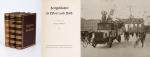
Die literarische Welt. [Mit zahlreichen Erstdrucken von Essays und Rezensionen von Walter Benjamin: “Die Technik des Schriftstellers in dreizehn Thesen” / Walter Benjamin – “Skandal im Théatre-Français” / Buch-Chronik der Woche von Walter Benjamin: “C.A.Bernoulli – Johann Jakob Bachofen und das Natursymbol” / Walter Benjamin – “J.P.Hebel – Ein Bilderrätsel zum 100.Todestag des Dichters” / Buch-Chronik der Woche von Walter Benjamin: “Franz Hessel” / Walter Benjamin – “Der Kaufmann im Dichter” / Walter Benjamin – “Aussicht ins Kinderbuch” (mit Abbildungen von Titeln aus der Sammlung Benjamin) / Walter Benjamin – “Noch ein Paar Neue Kinderreime” / Walter Benjamin – “Kinder” [I.Karussellfahrendes Kind / II. Zu Spaet gekommenes Kind / III. Verstecktes Kind”] / Titelseite als Kalenderblatt mit Karikatur-Portraits von Mitarbeitern der “Literarischen Welt”: u.a. Walter Benjamin, Walter Mehring, Willy Haas u.v.a. “Zum Neuen Jahr lasst Blumen sprechen” / “Wandkalender der “Literarischen Welt” fuer 1927 – Verse von Walter Benjamin / Zeichnungen von Rudolf Grossmann / Walter Benjamin – “Der Regisseur Meyerhold – In Moskau erledigt ?” – “Ein literarisches Gericht wegen der Inszenierung von Gogols ‘Revisor’” / Walter Benjamin – “Zur Lage der Russischen Filmkunst” / Walter Benjamin und Oscar A.H.Schmitz – “Eine Diskussion ueber russische Filmkunst und kollektivistische Kunst ueberhaupt” [Schmitz eroeffnet die Diskussion mit “Potemkinfilm und Tendenzkunst” – Walter Benjamin antwortet daraufhin dem “Bildungsphilister” Schmitz mit einer Polemik].

First Edition. Two Volumes with 94 Issues in total (31 issues in duplicate / 31 Hefte doppelt). Berlin, Ernst Rowohlt, 1925 – 1927. Folio. Pagninierung / Pagination of both Volumes: Volume I: The following 42 issues available in this collection are: 1. Jahrgang / Annual (1925): Nr. 2 und Nr. 4 / 2. Jahrgang (1926): Nr. 14, 19, Nr. 36 – Nr. 52 (17 Issues) / 3. Jahrgang / Annual (1927): Nr. 1-21 [Each issues with 8 pages with illustrations] / [Jedes Heft mit 8 Seiten incl. Abbildungen] / Volume II: 3. Complete Third Annual of 52 Issues for 1927): Kompletter 3. Jahrgang: Nummer 1-52. [Each issues with 8 pages with illustrations]. Illustrations in original woodcut-textillustrations are by Rudolf Großmann (several), Lili Réthi, B. F. Dolbin (several), Frans Masereel (several), George Grosz (Kinderzeichnungen), Renée Sintenis, Alfred Kubin, Max Beckmann, Man Ray and others. Hardcover (original title-wrappers inside a privately printed half-cloth binding) / Hardcover / Privater Halbleinenband der 20er Jahre. Small cutout to page 5 of Issue 2 (Advertising ? 8.4 x 14.5 cm) / (1 cm-tear to outer margin of all issues in Volume one – text not effected) / Titlepage of Issue 49, IInd Annual (1926), missing. Otherwise in very good condition with only minor signs of wear. While it would usually be desirable to have these issues in their original, unbound form, these two privately bound Volumes are actually a blessing and led to these issues to be preserved in unusually excellent condition. A Rare run of this peridocal, with a provenance of one “Frl. Nippoldt” (Miss Nippoldt), Weissenburgstr. 17 / Kleiner Ausschnitt auf Seite 5 der Nummer 2 von 1925 (Werbung) / (1 cm Einriss in den Rand der Nummern von Band 1 – Text nicht betroffen) / Titelblatt der Nummer 49 des II.Jahrgangs (1926) fehlt / Sonst sehr gut erhalten. Auch wenn eine ungebundene Broschur-Version dieser seltenen Zeitschrift einer Privatbindung normalerweise vorzuziehen ist, so ist in diesem Fall die Wahl der Bindung sehr gelungen und man ist fast dankbar wie gut die einzelnen Ausgaben dadurch erhalten wurden. Einige der Ausgaben haben einen alten Besitzvermerk: “Frl. Nippoldt” – “Weissenburgstr.17”, sowie gelegentliche, interessante Kommentare und Annotationen im Text (mit Bleistift)”.

Show details

[Middle East with Kuwait] Naylor, Collection of two (2) large boxes of materials regarding Kuwait, Iraq (near Basrah), Lebanon, Jordan (Halat Ammar and Al Mudawwara), Jordan in general, Arava Valley

1076. [David Naylor Geology & Petroleum Collection] – [Middle East Collection with Kuwait / Iran (Persia) / Yemen / Jordan] Naylor, David (Dave).

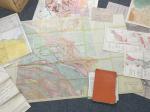
Collection of two (2) large boxes with rare and sometimes inscribed, Printed Materials and very rare Geological Surveys with Maps (for example it includes the very rare Geological Survey of Iran) from the private Reference- library of Geologist Prof. David (Dave) Naylor regarding Kuwait, Iraq (near Basrah), Lebanon, Jordan (Halat Ammar and Al Mudawwara), Jordan in general, Arava Valley (Dead Sea). See a full list of the contents below. These materials are all publications, sometimes official government papers or maps or academic publications from fellow geologists as well as for example official publications of talks given for OAPEC. All publications are revolving around the evaluation of Petroleum Deposits, Petroleum Geology and Stratigraphy or Hydrocarbon in the “Near and Middle East” – Maps and Charts and offprints, all of them rare publications and some only reprinted for private circulation. The focus of the publications ranges from very scientific-geological (″The Fauna of some Recent Marine Deposits near Basrah, Iraq”) to actual problems of prospecting (″Some Problems of Petroleum Geology in Kuwait”). These two boxes are only the Middle East Section of the David Naylor Collection (see all the Materials we own from the David Naylor-Reference library on our website). The collection also includes books related to the region (inquire for separate list).

Amman (Jordan) / Kuwait / Mexico / Potsdam, etc., c.1958 – 2011. Quarto. c. 1200 pages plus maps. Hardcover Boxes / Two bespoke made Boxes for the private reference library of Geologist David (Dave) Naylor. Very good condition with only minor signs of wear.

Show details

McKevitt, Christus Rex - An Irish Quarterly Journal of Sociology. A Collection of 24 Volumes

1083. [Curtayne, Alice] / McKevitt, P. / Lucey, C. / Conway, J. Jacobus / Christus Rex Society of Irish Diocesan Priests / Rísteard Ó Cíonga [Richard King as Illustrator] / etc.

Alice Curtayne as Contributor to Irish Periodicals / Journals / Digests. The collection aims for completion and collects not only issues of periodicals with contributions by Alice Curtayne but hopes to complete each set of periodicals to which Alice Curtayne contributed between the years of 1930 and 1980, in order to allow for cross-referencing of contributors, study cooperation between illustrators and Alice Curtayne, her influence and acceptance as early female contributor in a men’s world, possibly even deciphering pseudonyms under which Curtayne might have written or essays she might have contributed to but her name was omitted; in general: circumstances which have not been detected yet. The Collection is documented thoroughly in professional images and descriptions on our website and includes to date: I. Alice Curtayne as Contributor to “The Irish Digest”: 1. “The Irish Digest” from September 1940 – including the article: Alice Curtayne – “Lament of an Author” / II. Alice Curtayne as Contributor to “Christus Rex”: “Christus Rex” – An Irish Quarterly Journal of Sociology. A Collection of 24 issues of the important and underrated publication “Christus Rex” including: 1. Volume XX, No.4 of “Christus Rex”: Alice Curtayne – “The Council and Women” ]. / III. Alice Curtayne as Contributor to “The Furrow”: “The Furrow” – Monthly Journal published by the Leinster Leader, Naas and Edited by Rev. J.G.McGarry. A Collection of 56 issues of the Journal, including two issues with Curtayne – publications: 1. “Saint Patrick in his Confession” – (In: “The Furrow” from March 1951) and 2. “Marillac Manor” (in “The Furrow” from July 1959) and 3. “Ecumenism in Dublin” (In “The Furrow” from February 1966) / IV. Alice Curtayne as Contributor to “The Capuchin Annual”. Including: 1. Alice Curtayne – “For the Septcentenary of St.Anthony of Padua (1231 – 1931)” – [including a portrait photograph of Alice Curtayne] / 2. Alice Curtayne – “Five Irish Saints” (″The Living Patrick” / “Saint Colmcille – Irishman” / “Saint Brendan – The Navigator” / “Saint Ita” / “The Method of Saint Columbus” / (In: Capuchin Annual 1945-1946 – with Illustrations in color by Stained Glass Artist, Rísteard Ó Cíonga [Richard King].

Naas, Christus Rex Publications, 1949 – 1967. Octavo. 81 Issues with different amounts of pages and content. Overall c. 4800 pages. Original Softcover. Excellent condition with some minor signs of wear only. Some of the issues with annotations and some with a former library-stamp. Very rare run of these periodicals which invited contributions from other women writers like Ita Meehan.

Show details

Typed Letter signed from american philosopher John Wild to Philosopher Henry David Aiken

1094. [Maluf, Brother Francis] Wild, John / Aiken, Henry D.

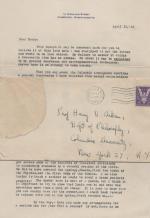
Typed Letter signed from american philosopher John Wild to Philosopher Henry David Aiken, informing Aiken: “I missed you especially two weeks ago when I attempted to defend a realistic view of ethics in terms of the concept of natural law. I am not sure, but I think you might have been in agreement with some of the points I tried to make as over against Lewis’ Kantian subjectivism and Demos’ [Raphael Demos] extreme Platonism….”. Besides some further niceties, John Wild talks in this letter intensely about Christian Arab Philosopher Francis Maluf, from Mashrah, Lebanon, who could be in John Wild’s mind the perfect “section man for your Phil A course”. Wild continues to praise the syrian, Maluf, who had been “teaching Mathematics and Physics in a war job out of Worcester and who has been keeping up his interest in philosophy by attenting courses around here, organizing discussion groups and other intellectual activities which amaze me by their versatility and intensity”. John Wild continues: “He has been offered a permanent job at the University of Beirut in Syria to teach Philosophy there (he is a friend of Malik’s) but if possible wants to stay around here for another year to study and learn before he goes back.” [Maluf had converted to catholicism in 1940 and was later known as Brother Francis Maluf.

Cambridge, April 15th, 1945. Octavo. 2 pages. Softcover. Very good condition with only minor signs of wear. Original two-page-letter with original envelope.

Show details

Gilpin / Castle Freke Library - Observations Relative Chiefly to Picturesque Beauty, Made in the Year 1776

1099. Gilpin, William. [Castle-Freke Library Bookplates]

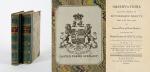
Collection of four Volumes (bound in two) by Gilpin – All from the historical library at Castle Freke (Castlefreke, West Cork / Ireland). The Volumes include: I. & II. Observations Relative Chiefly to Picturesque Beauty, Made in the Year 1776, on Several Parts of Great Britain; particularly the High-Lands of Scotland. [Second Edition, with an “Account of the Prints” bound to the rear] / III. Observations on the River Wye and several Parts of South Wales &c. relative chiefly to Picturesque Beauty; Made in the summer of the Year 1770 (Third Edition). / IV. An Essay on Prints – [″The chief intention of the following work was to put the elegant amusement of collecting prints, on a more rational footing; by giving the unexperienced collector a few principles and cautions to assist him”] (Fourth Edition with the printed dedication “To the Honorable Horace Walpole in Deference to his Taste in the Polite Arts; and the Valuable Researches he has made to improve them; the following work is inscribed by his most obedient and very humble servant, William Gilpin”). [Volumes I & II with 40 original illustrations and vintage 18th century maps [correctly 39 illustrations and one table], for example of Loch Lomond and the Firth of Forth/ all illustrations are vintage mezzotint-plates].

Mixed Editions. Four Volumes (bound in two). London, Printed for R. Blamire, Strand, 1792. Octavo. Pagination: Volume I: XI, [1], 221 pages with 24 mezzotints / Volume II: 195, XVI pages with 16 mezzotints and an “Account of the Prints” as well as “Translations of Latin Passages” / [Volume III]: [River Wye]: XVI, 152 pages with 16 (of 17) full – page mezzotints / [Volume IV]: [An Essay on Prints]: XIII, [3], 174 pages plus XI pages Index and 1 page Errata. Hardcover / Early 19th century quarter – morocco with gilt lettering and ornament on spine. Both volumes bound in unison. Very good + condition with only minor signs of external wear. Pages 185 – 191 of Volume I with some stronger browning. Otherwise the interior very clean. All mezzotints in very good or even better condition. This is the original copy from the historical Castle-Freke Library in West Cork (Ireland), with two armorial bookplates to front and rear pastedown with the family’s motto ‘Pro Patria’. With two pages of manuscript annotations by a contemporary hand with a reference between the common name “Tarbet” in Scotland and a place-name in County Kerry in Ireland” (pages 13 of Volume II) / another entry is on page 12 of Volume II regarding the name-sake “Loch-Loung” for a Lake of ships in Scotland and Ireland.

Show details

Page: 1 2 ... 8 9 10 11 12
: