

Complete Catalog (8513 items)

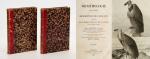
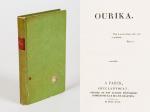
Duras, Ourika.

5024. Duras, Claire Duchesse de.

Ourika.

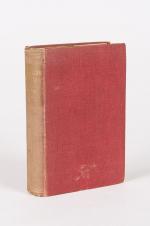
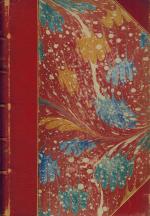
Édition Originale. Paris, Chez Ladvocat, 1824. 18 x 11 cm. 172 pages. Relié plein cuir vert / Beautiful contemporary Hardcover. Intérieur bon état malgré légéres rousseurs éparses. Couverture défraichie et tachée. Provenance: Exlibris: A Debidour (Élie Louis Marie Marc Antonin Debidour) / Premiere edition dans le commerce après la rare édition originale publiée entre 25 et 40 exemplaires en décembre 1823 par l’Imprimerie royale pour les amis de l’auteur. Ce court récit fut rapidement écrit en 1820 lors d’une retraite de convalescence. Sollicitée par Chateaubriand, ami de la Duchesse de Duras depuis 1809, qui avait parti- culièrement aprécier le texte, l’auteur se décida à publier l’ouvrage anonymement. L’histoire de cette jeune sénégalaise, éduquée en France se rendant compte à l’âge de 12 ans des préjudices liés à sa couleur de peau, est considérée comme le premier roman de la littérature française à aborder les problèmes de racisme. / First published edition, following a private printing of 25 copies. A very good+ copy in contemporary paper-covered boards. An anonymously published novel by a French woman who was a close friend of Chateaubriand and who established a well-known salon in London. Her work has been compared to that of Richardson and Rousseau for obvious reasons, but she is perhaps more relevantly understood in the context of the early 19th-century French women’s writing that has only rather recently become a subject of study. Based on the true story of a Sengalese servan, unaware of her race until she overhears talk of it among the French family for whom she works, and thus begins her life as a black woman. In large part the tale recounts her hopeless love for a white man and her eventual retreat to a convent. This is the first European novel featuring a black female protagonist, and according to John Fowles who at least in part based his own The French Lieutenant’s Woman on the work, the first attempt by a European to enter the mind of a black character. An attractive copy of this cultural landmark.

EUR 280,-- 

Show details   Add to cart

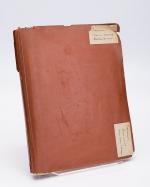
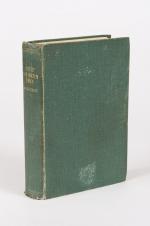
Pages from a Diary Written in Nineteen Hundred and Thirty. [Signed / Inscribed by George Yeats

5052. Yeats, William Butler / [George [Georgie] Yeats / Mrs. Eva Hempel / Eduard Hempel].

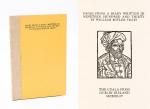
Pages from a Diary Written in Nineteen Hundred and Thirty. [Signed / Inscribed by George Yeats to Mrs. [Eva] Hempel, wife of german ambassador to Ireland during World War II].

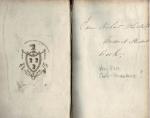
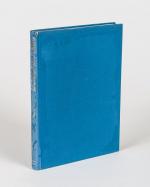
No.8 / 200 copies, of the original limited edition. Dublin, The Cuala Press, 1944 [September 1944]. Octavo. 58 pages. Original Hardcover. Inscribed by George Yeats on the front free endpaper: “Mrs. Hempel from George Yeats, April 1944”. This has to be of course “April 1945”. The impossibility of signing/inscribing a book in April 1944 if it was only published in September 1944 is easily explained with the classic everyday-mistake of still writing the previous year in the first few months of the following year. A stunning association. The signature and inscription is a solid match to George Yeats’ autographs in her later hand and William Butler Yeats and George Yeats were frequent visitors to the Hempel’s in Dublin. In addition, the low number of the edition (8/200) suggests this being one of the reference copies given to George Yeats, who contributed heavily to the volume and even added an explanatory note (in print) verso the titlepage. This copy is near fine, bound in the publisher’s quarter buckram over yellow, paper-covered boards. The books pages remained unopened. Eva Hempel’s husband Eduard Hempel is one of the most controversial figures in modern Irish history, excoriated by some as ‘Hitler’s man’, defended by others such as the country’s first President, Eamon De Valera. Certainly, Hempel presented William Butler Yeats in 1938 with a copy of ‘Germany Speaks’ whose inscription described an ‘unforgettable afternoon’ spent together by Yeats and Hempel. Eduard Hempel and his wife were accepted socialites in the Dublin world of World War II, famously receiving a condolence call by de Valera upon the death of Hitler. Eduard Hempel and his wife Eva were granted asylum in Ireland after world war II and stayed way beyond the end of World War II.

EUR 380,-- 

Show details   Add to cart

Page: 1 2 ... 48 49 50 51 52 53 54 ... 85 86
: