


España. Castillos y Alcázares.
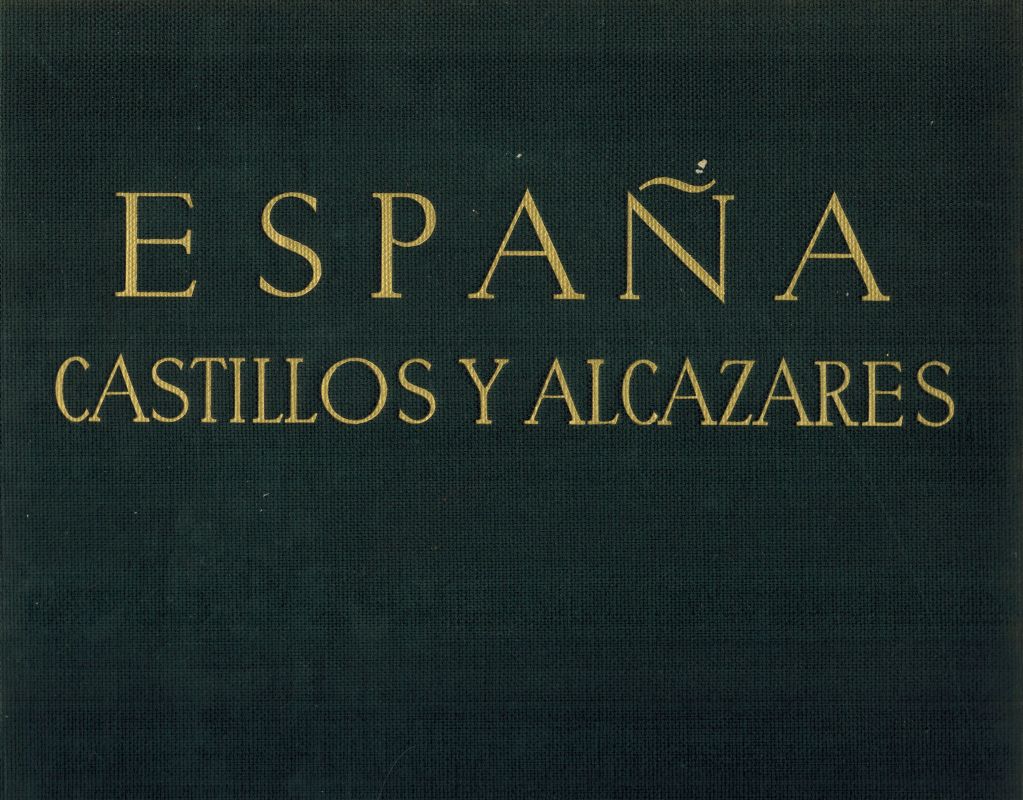
España. Castillos y Alcázares. [Castles in Spain] Con 396 laminas en huecograbado y 16 planchas en color. Prólogo de Fray Justo Pérez de Urbel.
Tercera Edición. Madrid, Publicaciones Ortiz-Echagüe, 1960. 32 cm x 27,5 cm. 312 pages. Original Hardcover. Very good condition with only minor signs of external wear. Gilt lettering on spine and on front cover. Name inscribed on front free endpaper. Stamp of publisher on title page.
José Ortiz-Echagüe (August 2, 1886; Guadalajara – September 7, 1980; Madrid) was a Spanish entrepreneur, industrial and military engineer, pilot and photographer, founder of Construcciones Aeronáuticas SA (CASA) and Honorary lifetime President of SEAT (Sociedad Española de Automóviles de Turismo). He was also nominated Gentilhombre de cámara con ejercicio (Gentleman of the Bedchamber) during the reign of the King of Spain Alfonso XIII.
Ortiz-Echagüe believed strongly on the one hand that Spain must modernize itself in accordance with the spirit of the times – inter alia by founding industrial companies – but on the other hand was well aware that a broad modernization could lead to disappearance of traditional clothing, a change in the villages and even a transformation of the landscape. He wanted at least to capture with his camera and hold this cultural heritage, before the change occurred.
In the field of artistic photography, he is perhaps the most popular photographer in Spain and one of the most well-known abroad. In 1935 the magazine ‘American Photography’ named him one of the top three photographers in the world, while some critics have also considered him to be one of the best Spanish photographers to date. This recognition becomes even more meritorious when it is considered that photography was a hobby to which he only devoted his spare time, especially during weekends and his various trips.
From an artistic point of view one might consider him as a representative of the generation of ‘98 in photography, but he is also often included within the photographic movement of pictorialism, being in fact the best known representative of the Spanish photographic pictorialism, even though this late definition never liked to Ortiz-Echagüe. His photographic work focuses on portraying the most defining characteristics of a people, their customs and their traditional costumes as well as locations. He managed to project through his pictures a personal expression which is closer to painting, often using effects during photo processing. Echagüe remained faithful throughout his life to the aesthetics and techniques of pictorialism, including using gum bichromate and coal.
Since 1898 when he got his first camera, he took thousands of photographs entirely in black-and-white. He exposed his negatives using a special technique similar to the carbon printing one (‘carbón fresson’) which was the mainstream practice during his youth. Soon its use would become outdated, however he followed that technique throughout his art, giving a special hue and a greater contrast result to his positives, which now makes his work easily recognizable.
The ability to intervene in the final outcome of a photograph, the greater richness of tones given from the pigment and its stability were the main reasons that Jose Ortiz-Echagüe used this technique. Nevertheless, this archaic method is not considered to be the strongest component in his images. Without an intriguing subject, a good composition, well directed lights on models and the correct layout of the scene, the procedure of coal placed directly to Fresson paper would give a vulgar result.
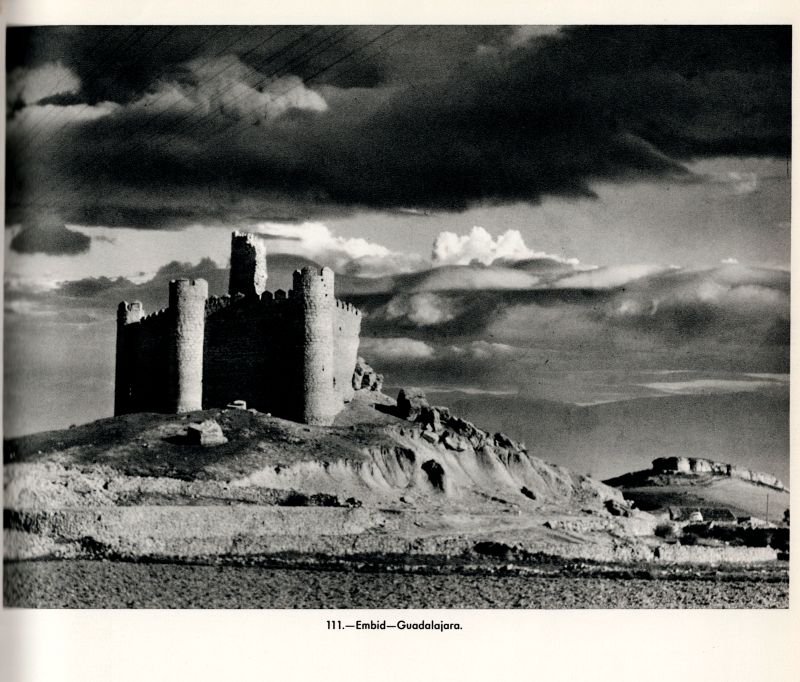
The ‘España, Castillos y Alcázares’ (Spain, Castles and Palaces) group could be considered a subcategory out of the series ‘España, Pueblos y Paisajes’, but even if it is characterized by extreme dedication, there are very few examples of this series and one of them being in possession of his friend Francisco Benito, server and family confidant in Madrid. (Wikipedia).
- Keywords: Alcázares · Architecture · Architecture – Rare · Castles · Castles in Spain (Architecture) · Catalogue No.6 – Photography · Catalogue Twentyfive – Architecture · Photography · Photography – Rare · Spain · Spain History · Spanische Kulturgeschichte · Travel Spain – Rare
- Language: Español
- Inventory Number: 70353AB
EUR 128,--

We ship per DHL Express
Contact
Inanna Rare Books Ltd.
Woodley House
Castletownshend Road
P81 D262 Skibbereen, County Cork
Ireland
Phone: ++353 - (0) 87 - 102 5412
E-Mail: info@inannararebooks.com
Internet: https://www.inannararebooks.com
Online Bookshop specialized in rare
and secondhand books.
Newsletter and E-Catalogue Sign Up
Payment Options


© 2026 Inanna Rare Books Ltd. | Powered by HESCOM-Software
Follow Us

