Manuscript Letter Rare (19 items)

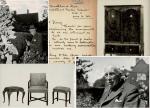
Percy A. Wells / May Morris - Manuscript Archive Material on Furniture Design with Letters, Drawings, Photographs and Books

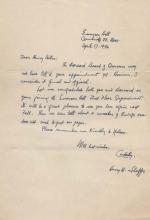
11. Wells, Percy A. (1867-1956) / [Letter by Morris, Mary ‘May’ (Designer)] / [Letter by Allom, Sir Charles Carrick (english decorator)] / [Letter by Garnett, Prof. William (Experimental Physics)] / [Letter by Henry, Jacob Solomon (Furniture Maker)] / Letter by Hems, Harry (English architectural and ecclesiastical sculptor)] / [Letter: Image, Selwyn (British Artist & Designer of the Arts & Crafts Movement)] / [Letter: Russell, Sir Sydney Gordon (English Designer & Craftsman) / [Letter: Quennell, Marjorie (Courtney) (British historian, illustrator and Museum Curator at The Geffrye Museum) //

Small Archive / Manuscript Material, Letters, Designs, Books and Pamphlets as well as vintage photographs of Furniture like Chairs (Percy A. Wells Chair), Wardrobe, Advertising of Exhibitions [chaired for example by Christopher Hussey], etc. etc. This material all originates from Percy A. Wells’ personal collection and sensationally also includes a manuscript notebook / sketchbook with his drawings, designs and a detailed, typescript with autobiographical memories in which Wells details his decades of being involved in Furniture Design. Loosely inserted in the manuscript notebook / sketchbook, is a signed manuscript letter on stationery of Kelmscott Manor by Mary ‘May’ Morris, daughter of the Pre-Raphaelite artist and designer William Morris and his wife and artists’ model, Jane Morris [included is ephemeral material which for example informs about a pair of Episcopal Gloves, designed by William Morris’s daughter [May Morris] and the clipping continues: “Those who remember Morris’s attitude towards the Church will smile and reflect upon time’s revenges”]. The collection includes an abundance of information which easily can lead to a monograph on the life of Percy A. Wells. Detailed description of the Archive and all materials contained below (more details will be listed constantly).

Dulwich / Shoreditch / London a.o., Percy A.Wells Private Library, c.1900-c.1920. Octavo / Quarto / Folio. Hardcover Folder with loosely inserted material like letters and photographs, envelopes, signed and inscribed books and rare pamphlets with designs etc. Very good condition with only minor signs of wear. Fantstic Archive and lots of unpublished material of one of the more eminent Cabinet, Furniture and Chair – Designers which resulted from inspiration by William Morris’ Kelmscott – School. Percy A. Wells Chairs are still in regular demand today and sell for stunning prices (3000 £ etc.).

EUR 1.000,-- 

Show details   Add to cart

Taylor, Collection of six (6) items/original, vintage and personal materials

12. Taylor, Tom / [Abraham Lincoln].

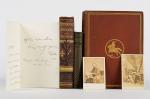
Exquisite collection of six (6) items/original, vintage and personal materials by/of Tom Taylor. The collection includes a 2 1/2 page, signed manuscript letter [MLS] by Tom Taylor to an unknown recipient , discussing a memorial he sent to Robert Browning’s patron, John Kenyon and mentioning former Prime Minister Lord Aberdeen [George Hamilton-Gordon, 4th Earl of Aberdeen]. The collection also includes two vintage 19th century cabinet photographs [Carte de Visite’s] of Tom Taylor, a later edition of Ballads and Songs of Brittany and two beautifully inscribed and signed presentation copies of his major works: 1. The first edition of Ballads of Brittany – London/Cambridge, MacMillan and Co.,1865 with many illustrations by Tissot, Tenniel etc. (This first edition is signed and inscribed by Tom Taylor to Emilia Ventana at Xmas 1864, before the publication of the book commenced) and 2. Tom Taylor’s Historical Dramas. London, Chatto & Windus, 1877. Signed and inscribed by Tom Taylor to Marie de Beauvoisier in March 1879.

London / Cambridge etc., Chatto & Windus / Routledge & Sons / etc., c. 1850-1879. Octavo. Ballads and Songs of Brittany (1865 edition): Frontispice, XXII, 239 pages / Ballads and Songs of Brittany (Later Routledge edition): XVI, 176 pages / Tom Taylor’s Historical Dramas: VIII, 466, 32 pages. / Manuscript Letter: 2 1/2 pages. Original Hardcover / The manuscript letter in a Folder, it includes an A4 manuscript leaf from a 19th century autograph-collector describing the letter by Taylor. / The two vintage cabinet photographs of Taylor included in the Folder with the autograph. Very good condition with only minor signs of external wear.

EUR 1.000,-- 

Show details   Add to cart

Vere Foster, The Two Duchesses - Presentation copy with important manuscript letter [signed and inscribed]

15. Foster, Vere [Henry Louis / Lewis] / [Georgiana Duchess of Devonshire / Elizabeth, Duchess of Devonshire].

The Two Duchesses – Georgiana, Duchess of Devonshire / Elizabeth, Duchess of Devonshire – Family Correspondence of and Relating to Georgiana, Duchess of Devonshire / Elizabeth, Duchess of Devonshire, Earl of Bristol (Bishop of Derby), The Countess of Bristol, Lord and Lady Byron, The Earl of Aberdeen, Sir Augustus Foster Bart, and Others, 1777-1859. First Edition. With 17 illustrations.

London / Glasgow and Dublin, Blackie & Son Limited, 1898. Octavo (16 cm x 22,5 cm). XII, 497 pages with 16 full-page-illustrations and one small vignette, showing the Two Duchesses in cordial embrace. Hardcover / Original, green publisher’s cloth with gilt lettering and ornament to spine and armorial supralibro to cover with the Motto of the “British chivalric Order of the Garter”: “Honi soit qui mal y pense” [″shame on anyone who thinks evil of it”]. Very good condition with some minor signs of wear only. “Presentation Copy of “The Two Duchesses” with Autograph / Manuscript – Letter by Vere Foster to his niece, Emily Albinia “Alba” Foster. With a stunning, unpublished, two-page manuscript letter, revealing several important details about the immediately favorable reviews and reception of the book “Two Duchesses” [″in the Daily Telegraph”] and Vere Foster’s disdain about some criticism from one J.Donohue [which led to an alteration in the second edition of the book]. Vere Foster is also expecting a review to appear in the “Athenaeum” but reports: “the Athenaeum has nothing yet”. Vere Foster apologizes to his niece for the delay in sending the book and explains that he had left 12 “parcels” with Blackie’s agent and gave instructions to send them, but a few days later found they had been “untouched”. One of the most important finds of Vere Foster – Material in recent years with no sign of similar material on offer in the past years on the international market.

Show details

Small Archive of personal correspondence between irish-american writer John Montague and irish artist Louis Le Brocquy plus many and related items

17. Le Brocquy, Louis / Montague, John / [Dupin, Jacques] / [Samuel Beckett].

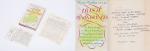
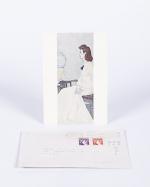
Small Archive of personal correspondence between irish-american writer John Montague and irish artist Louis Le Brocquy plus many related items. The correspondence also includes John Montague touching on Samuel Beckett. The core of the collection includes 1. Extremely insightful and important, very personal manuscript-letter from John Montague to Louis Le Brocquy – Inside an envelope addressed by John Montague to Louis Le Brocquy at his french residence ‘Domaine des Combes’ with Louis Le Brocquy’s answer carefully tucked into the same envelope, treasured by John Montague. The densely filled, very personal 4-page-manuscript letter from John Montague, is dated Christmas 1981, written after “a sabbatical [..] on a long tour which led me as far as Los Angeles” and is a strong reflection of John Montague’s personal struggles, thoughts and influences as a writer; he talks about his ten years of teaching in the US “after O’Riada’s death led to a vacuum” and “enduring the semi-bourgeois limbo of Cork”. Montague speaks about the time “after the harness came off” and he “felt quite strange, and after thirty years my stammer returned in painful, nearly uncontrollable force”. Montague even touches on his fears about his health and continues “I clocked into a clinic for a rest cure….so far liver excellent, so it is not Sean or Brendan all over again (in any case, loving the stuff, as you do, I can’t overdrink; the tastebuds are against it)”. Montague dives into comparisons with Samuel Beckett: “″Did you realize that Sam Beckett was under analysis at the Tavistock Clinic for two years ? – The early Beckett is a smart alec; the break comes when he has to survive in post-war France and accept “his own darkness”. Montague also touches on his struggle with his mother “Isn’t it terrible that we spend up to nearly middle-[a]ge coping with the traumas of youth, with no way round it ? – I have cleared/cleaned/buried & forgiven my mother in my next book “The Dead Kingdom”….” – The letter continues to talk about books, “the Landslide Manuscript”, poetry and his work etc. etc. He mentions a Dupin “play” which “will travel in my Paris luggage”. Montague also touches on the subject of the Irish Troubles and writes “I have always, by the way, believed that 1916 may have been a mistake as Yeats said: “For England may keep faith – For all is said and done” / Montague speaks about “My own area of Tyrone is blessedly free from all but minor incidents” – Amazing document of confidence and trust between two irish landmark personalities. 2. Louis Le Brocquy’s answer to John Montague is dated “New Year’s Day 1981”[which should have been 1982]: A. Very personal manuscript Letter – a direct answer to Montague’s letter from “Christmas 1981” (1 sheet with both pages filled in ink and signed “Louis”) in which Le Brocquy reflects on the tense political situation with Northern Ireland and the overall worldwide tension of a looming war / Le Brocquy writes that he did have a “wild hope that when Charlie took office…that he and Thatcher might between them opted a ‘Rhodesian’ solution in the North” / Le Brocquy also writes about the eagerly awaited publication of “Selected Poems” of John Montague and he also asks John if “you thought of collecting Esteban’s and Dupin’s poems in French with your translations ?” – Le Brocquy offers to help with illustrations etc. – Both letters together in an envelope which suggests that John Montague received his letter to Louis le Brocquy back from the Le Brocquy-estate after Le Brocquy’s death. / Also included: B. A manuscript postcard with Le Brocquy’s “Girl in White” as a postcard-reproduction in which Le Brocquy suggests a project with John Montague and sends greetings to Montague’s wife Evelyn and the kids (in envelope from Carros,France) / C. In his function as chairman of Amnesty International, Le Brocquy sends a callout by Amnesty International to John Montague and kindly asks him to support the cause. He sends the callout to John by adding a few manuscript, personal lines of affection (in envelope from Carros,France).

France / Ireland, Carros / Cork, 1980-1981. A4. 4 pages on two sheets (main Montague-letter), 2 pages on 1 sheet (Le Brocquy – answer), 1 postcard, 1 manuscript-letter from Jacques Dupin to John Montague (25.10.1978) about a translation of “L’Éboulement” (Dupin also speaks about Louis le Brocquy in the letter), several pages of letters (mostly typed and signed) from other figures in irish and international literature and art. Original Envelopes. Very good condition with only minor signs of external wear. Besides some ephemeral materials from personalities in Literature and Art, addressed to John Montague, the small collection includes several vintage photographs of John Montague, taken during his acceptance of a honorary Doctorate of Literature at UCC, Cork, as well as a Legislative Resolution by the State of New York (Senator Daly), recognizing and thanking the distinguished author and poet John Montague with this decree on May 26, 1987. Among the lesser interesting materials is a pamphlet titled “Ireland’s Literary Renaissance – 20th century Portraits” in which portraits by Louis Le Brocquy of John Montague and Thomas Kinsella are included. The pamphlet is accompanied by a letter from James White to John Montague in which he explains this being a publication that was released for an exhibition in Chicago and he apologises for the entries being “necessarily short but hopefully reasonably correct”. Provenance: From the private collection of John Montague’s papers in his recently sold West Cork Home.


Show details

Collection of Five (5) Manuscript Letters from Greek-American Philosopher, Raphael Demos

18. [Aiken, Henry David] Demos, Raphael.

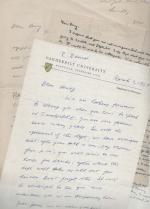
Collection of Five (5) Manuscript Letters from Greek-American Philosopher, Raphael Demos to Philosopher Henry David Aiken. Besides very few personal matters (Aiken rented a Lice-infested house from Demos), the letters are lengthy and full of content regarding philosophical questions. Demos thanks Aiken for his “thoughtful comments about my article on ‘Society and the Individual’ and Demos reflects on Aiken: “Now as to your point that goodwill is addressed to me which is capable of joys and sorrows and not just an angel – I will distinguish between respect and goodwill. Angels, because rational, have intrinsic worth, and so claim respect certainly. Value and respectability don’t imply capacity for feeling. But goodwill does imply that the recipient is a striving, failing, succeeding, up-ended individual, who has sorrows & grip – not just an angelic being. While the Greek identify man with his rationality, it is noticeable that common sense proceeds otherwise; when the Radcliffe girls say their Professor is so human, they don’t mean he is intellectual, they mean the opposite – that he has non-rational impulses and feelings…..” / The collection of letters originates from the personal collection of Henry Aiken and also comes with a scathing letter from American Philosopher Arthur Edward Murphy in which Murphy writes to Aiken about Raphael Demos and does not hold back in his evaluation of Demos and his Philosophy: “I just saw your remarks re Demos in the Journal. Very well done ! I think Demos is not very bright, however, and it is perhaps better not to give him too much publicity. I don’t think he will convert any one except for those already suffering from dithers & blithers. And it is a waste to refute him. Intelligent people don’t have to be convinced. And bigots like R.D. can’t be convinced. Strictly speaking, before Demos creates an obligation in others… he ought to say in plain unemotional prose what he means by such concepts as ‘God’ & ‘evidence’. It is perfectly possible that if we knew how he uses these terms, we would agree that what he says is trivially true. This discussion is presumably in the domain of logic. But discussion on that domain when one of the parties refuses to make explicit the rules of his game can never terminate in illumination. Nevertheless, I think you handled him neatly & have done yourself no harm as general opinion is concerned. He is a perfect horrible example of retrogression. Ugh ! A perfectly low grade person morally & intellectually nonregarding as a seer & defender of orthodoxy…… Have you seen Lazerowitz’s [Morris Lazerowitz] paper in Mind on Universals. It is highly provocative. I would like to discuss it with you….”.

Westport Point (Massachusetts), c.1944 – 1967. Octavo. 13 pages of letters by Raphael Demos to Aiken / [Plus:] 1 page of a manuscript letter by Arthur Edward Murphy to Aiken about Demos. Very good condition with only minor signs of wear. Original Letters or anything published by Raphael Demos or Arthur Edward Murphy, are very rare !

Show details

The Life and Times of Sir Peter Carew - with two manuscript letters by historian George Oliver, Exeter

19. [Carew, Sir Peter / George Oliver (Historian) / John Carew Esq.] MacLean, John.

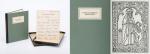
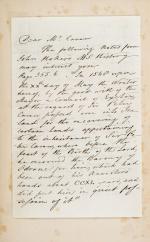
The Life and Times of Sir Peter Carew, Kt. (From the Original Manuscript) – With a Historical Introduction and Elucidatory Notes, by John MacLean. [Personal copy of John Carew Esq., with two unpublished manuscript letters by historian George Oliver, Exeter (Devon), tipped-in to the rear of the Volume, one longer manuscript entry to the rear in which George Oliver mentions that he has consulted the Inventory of Ottery Mohan House and that he has “made a few pencil notes in the margin” of the book (Oliver must have been sent the book and then returned it or it was his own copy and he gifted it to John Carew)/ George Oliver helped John Carew, Esq., a descendant of Sir Peter Carew, to identify some information form the original manuscript of John Hoker, to which Oliver must have had access. The letters deal with details of John Hoker’s [Hooker’s] Manuscript on Sir Peter Carew and details in John MacLean’s Biography of Carew. George Oliver’s correspondence with John Carew, a descendant of Sir Peter, is very interesting indeed and Oliver seems to study the original manuscript by Hoker for John Carew and reports his insight in the original manuscript of Hoker’s Manuscript on History, mentioning for example Carew’s death-notice: “This year died the worthy and Honorable Knight Sir Peter Carew at Ross in Leinster, and buried in the City of Waterford in Munster in Ireland, in all such honourable order…” (see detailed images on our website)].

London, Bell & Daldy, 1857. Octavo. Frontispiece portrait of Sir Peter Carew (Steel Engraving by J.J.Chant, being Plate I.), CXVIII, 317 pages plus 6 pages “List of Subscribers”. With several Plates: Plate II: Musical Notes: “By a Bank as I lay” / Plate III: Monument to Sir Peter Carew in St.Peter’s Cathedral, Exeter (Steel Engraving) / Plate IV: Folded Map of Kylkenny (Kilkenny) / Plate V: Pedigree of the Family of Carew (Large Fold – out Plate). Hardcover / Original publisher’s cloth with gilt lettering on spine and armorial emblemata on front board. With the armorial supralibro of the Carew Family to the binding’s front board: Arms of Carew: Or, three lions passant in pale sable / Manuscript-entry of previous owner John Carew on endpaper. Boards fragile and spine loosened. In protective Collector’s Mylar to give the slightly broken binding stability. A very rare publication with the beautiful, signed manuscript-letters by George Oliver, signed in the years 1857 and 1858. The letters are also of interest regarding the history of John Hoker [John Hooker / John Vowell] because George Oliver mentions Hoker’s entry “into the New Office of Chamberlain of Exeter at Michaelmas 1555 – having the fee of £4 by the yere & his Lyveries – MS. Hist. p.351”.

EUR 250,-- 

Show details   Add to cart

Page: 1 2
: